
It’s a familiar assumption, isn’t it? Capitalism: It’s a ploy designed for the rich, a “hunger game” where the winner gets to call the shots; a system that exploits the poor. A monstrous entity that simply devours and enriches those at the top while those on the bottom struggle to survive. But is this the real picture of capitalism? Or is it an under-examined assumption, a distorted truth, let’s say? Let’s delve deep to pull out some facts and fiction about capitalism.
Capitalism: A Game of Thrones for the Elite?
Over the years, the capitalist system has been demonized as a monster feeding on the underdogs while the rich gorge themselves on the spoils. Critics say it’s a system stacked against the common folk, a twisted game favouring the elite. Well, is there real merit to this claim?
Here’s a fact that turns that whole argument upside down. We live in an age where entry into the business world is becoming as uncomplicated as ordering a top-rated book on Amazon. The doors are not just wide open for the elite but for anyone with a brilliant idea, tons of passion and an unrelenting spirit. Don’t take it from me, take a look at the top of the business world today.
The titans of the tech world like Mark Zuckerberg and Jeff Bezos were not born with silver spoons in their mouths. They started from the bottom, with little more than a brilliant idea, and climbed their way to the top of the capitalist food chain. In this game, it isn’t about who your parents are or how much money you have in the bank, but resonates more of a”The Hunger Games” saga, where those equipped to take on the brutal wilderness with sheer determination, innovative ideas, unyielding spirits (and maybe a tad bit of luck), emerge the victors.
Demystifying the “Capitalism Exploits the Poor” Theory.
Another widespread belief is that capitalism is a leech that sucks the blood of the many and fills the cups of a chosen few. Critics of capitalism say it’s a system designed to take from the poor and give to the rich. But is this really the case?
Here’s an analogy to help us parse this. Imagine the economy as a sumptuous apple pie where each citizen gets a slice. The critics say that for the rich to have bigger slices, the poor must get smaller ones. It seems logical at the first glance but fails miserably to consider one crucial detail: the pie is not a stagnant entity but grows or shrinks depending on the health of the economy. Thus, while the rich may have larger slices, it doesn’t always mean the poorer people get fewer crumbs.
Symbolically, this signifies that capitalism doesn’t rob the poor to feed the rich, contrary to popular belief.
Capitalism – It’s all about Money. Or Is it?
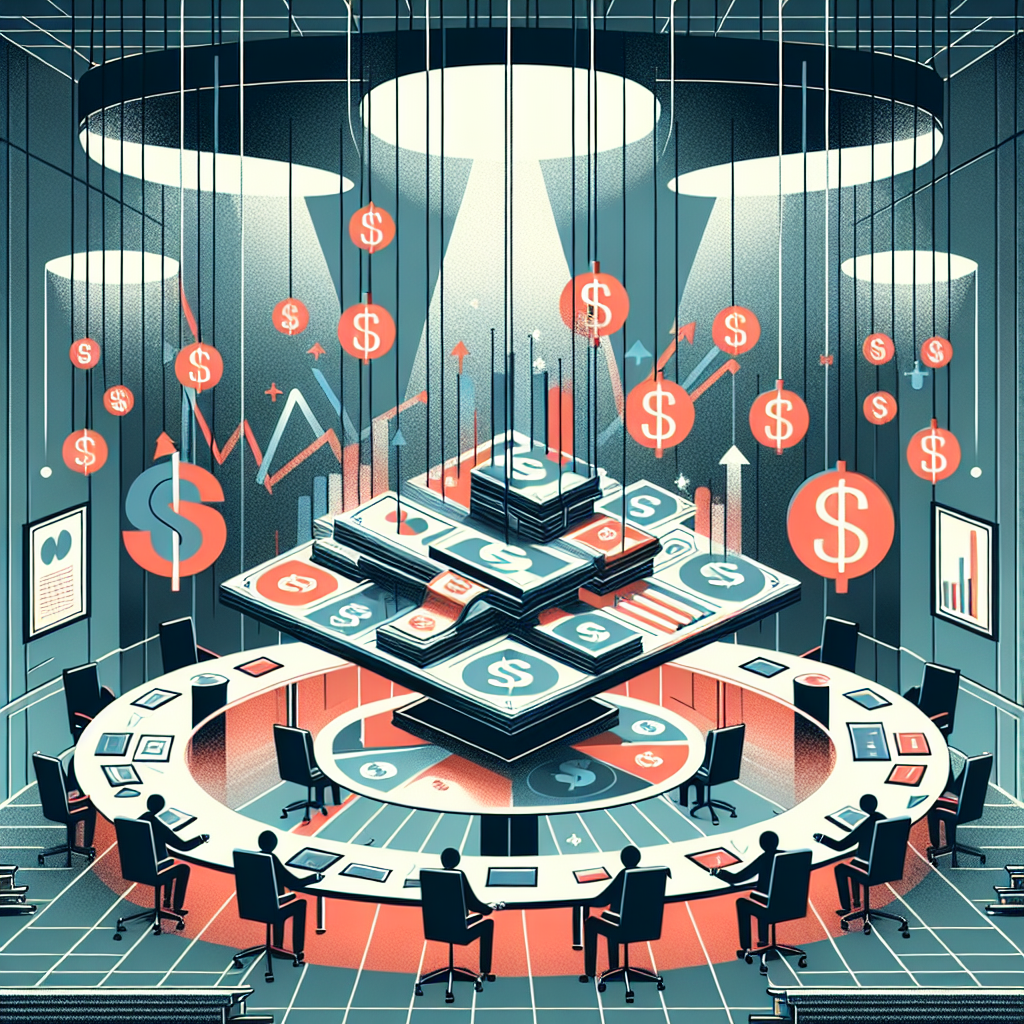
Okay, now let’s hit another big question head-on: Is capitalism all about fattening the pockets and hoarding wealth? The answer is a resounding YES and NO.
Confused? Allow me to explain.
Indeed, capitalism is centered around making profit. But it’s about much more than that. Capitalism is essentially about freedom: the freedom to pursue our passions, follow our instincts, and be the creators of our own destinies.
Isn’t that a deeper, more refined kind of wealth? Capitalism is the fertile ground that sprouts entrepreneurial ideas, enables innovation and encourages risk-taking. It inspires individuals, infuses them with courage to chase their dreams and allows the opportunity to achieve them.
In essence, capitalism does not just lead to monetary gain but gives birth to a society where its people achieve their full potentials.
The Verdict: Capitalism – Angel or Demon?
So, given the power to write the financial rules of the world, how would you handle capitalism? Will you eradicate it completely or appreciate its innate beauty behind the harsh façade of distortion?
Let’s be clear, capitalism isn’t a heaven-sent miracle. It has its demons, its unfair play, its disadvantages. But, just like any system crafted by the imperfect hands of humans, it can be misunderstood and misused.
Capitalism is a bit like a feral horse, charged with raw, untamed power. Left on its own, it may cause upheaval and damage. But if understood, harnessed and driven with care and respect, it becomes a powerful force that aids society forward.
It is not about scrapping the capitalist system altogether but understanding its essence and learning to use it better. To use it to uplift society, to fuel human ambition and creativity.
So, after peeling off the veneer of myths, and understanding its realities, do you still believe capitalism is the root of all evil in society? Or do you, perhaps, start seeing it as a powerful tool that in the right hands, can lead humanity into a future filled with unbounded potential?
That’s the question that gnaws within. It’s a question worth pondering deeply for those who seek the truth behind the distorted realities of capitalism.